A story · steps that turn down
Same checklist. Different results.
Two brothers, one routine, two very different mornings.
Before
Same checklist. Different results.
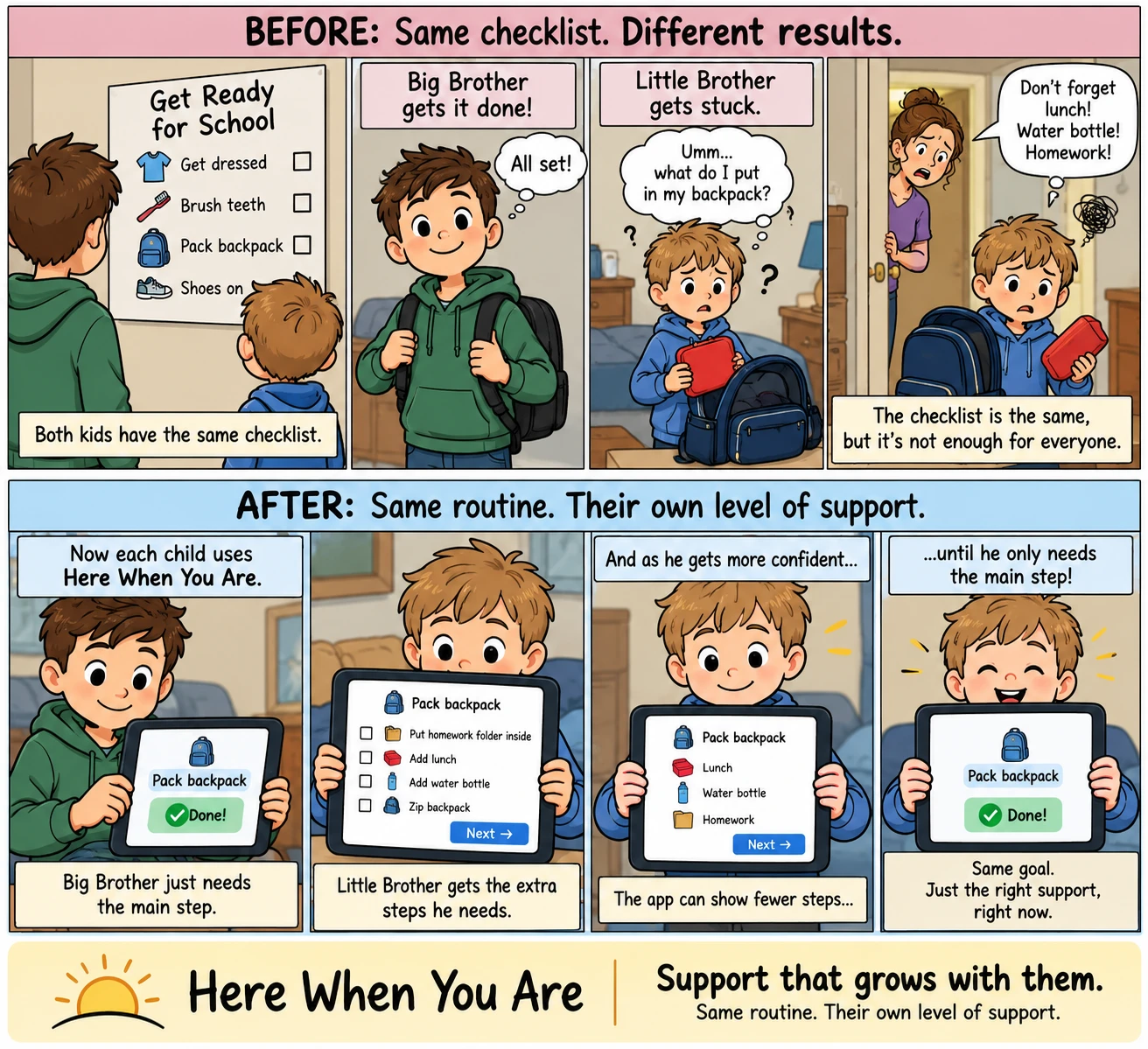
1Both kids have the same checklist.
Get ready for school: get dressed, brush teeth, pack backpack, shoes on. One list on the wall, for both of them.
2Big Brother gets it done.
“All set!” Backpack on, out the door. The list was enough.
3Little Brother gets stuck.
“Umm… what do I put in my backpack?” Pack backpack is one line to his brother and a mystery to him.
4Mom fills in the gaps. Again.
“Don't forget lunch! Water bottle! Homework!” The checklist is the same, but it isn't enough for everyone.
After
Same routine. Their own level of support.
1Now each child uses the board.
Big Brother just needs the main step. Pack backpack — done.
2Little Brother gets the extra steps he needs.
Under the same line: put homework folder inside, add lunch, add water bottle, zip backpack. Next, next, next.
3And as he gets more confident…
The steps get fewer. Lunch, water bottle, homework — three, not four. He hardly notices.
4…until he only needs the main step.
Same goal. Just the right support, right now. Nobody said “you're ready”; the list just got shorter.
Support that grows with them.
Most tools have one setting, pitched at whoever is most capable. On Here When You Are the amount of help is set for each child — and it turns down. The routine never changes. The steps underneath it do, until a child doesn't need them. That is the whole idea: a support system that works itself out of a job.
Their own level of support.